
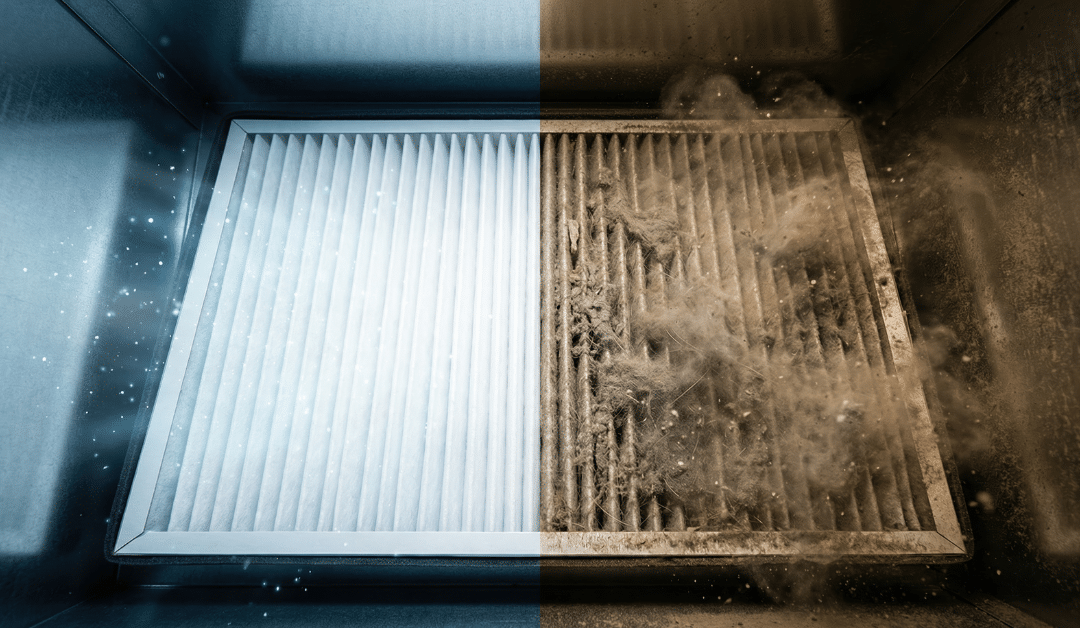
Your HVAC system depends on many different components working together to keep your home comfortable, but one of the smallest parts is also one of the most important. HVAC air filters protect your heating and cooling equipment by trapping dust, dirt, pollen, pet dander, and other airborne particles before they circulate through your home or enter the system itself.
Unfortunately, air filters are also one of the most commonly overlooked maintenance items. Many homeowners forget they even exist until their HVAC system starts experiencing problems. While replacing a filter may seem like a minor task, neglecting it can have major consequences for your comfort, your utility bills, and the lifespan of your equipment.
If you’re wondering whether changing your filters really matters, the answer is yes. Here’s what can happen when HVAC air filters are left unchanged for too long.
HVAC Air Filters Are Your System’s First Line of Defense
Before understanding the consequences of neglecting your filters, it helps to understand their purpose.
HVAC air filters capture airborne contaminants before they enter your heating and cooling equipment. Without them, dust and debris would collect on important components like the blower motor, evaporator coil, and ductwork.
In addition to protecting the equipment itself, filters also improve indoor air quality by reducing the amount of dust and allergens circulating throughout your home.
When HVAC air filters become clogged, they can no longer perform these important jobs effectively.
Reduced Airflow Throughout Your Home
One of the first problems caused by a dirty filter is restricted airflow.
As debris accumulates, it becomes more difficult for air to pass through the filter. Your HVAC system must work harder to pull air through the obstruction and distribute it throughout your home.
You may begin noticing:
- Weak airflow from vents
- Rooms that never seem to cool or heat properly
- Hot and cold spots throughout the house
- Longer heating or cooling cycles
Poor airflow not only affects comfort but also places unnecessary strain on your HVAC equipment.
Replacing HVAC air filters on schedule helps maintain proper airflow and allows your system to operate more efficiently.
Higher Energy Bills
When airflow becomes restricted, your HVAC system has to run longer to achieve the temperature set on your thermostat.
Longer run times require more electricity, which directly affects your monthly utility bills.
Many homeowners are surprised to learn that something as inexpensive as HVAC air filters can have such a significant impact on energy efficiency.
A clean filter allows air to move freely through the system, reducing workload and helping your equipment cool or heat your home more effectively.
If your energy bills continue increasing without a clear explanation, a dirty air filter may be one of the first things to check.
Increased Wear and Tear on Your Equipment
Your HVAC system is designed to operate under specific airflow conditions. When airflow becomes restricted, every major component must work harder.
The blower motor may run longer than intended. The compressor experiences additional stress. Fans and electrical components endure greater workloads.
Over time, this extra strain accelerates wear and increases the likelihood of mechanical failures.
Replacing HVAC air filters regularly is one of the simplest ways to reduce unnecessary stress on your equipment and extend its lifespan.
Poor Indoor Air Quality
Your HVAC system continuously circulates air throughout your home.
When HVAC air filters become overloaded with dust and debris, they lose their ability to capture airborne particles effectively. Instead of trapping contaminants, the system may begin recirculating them.
This can lead to increased levels of:
- Dust
- Pet dander
- Pollen
- Mold spores
- Other airborne particles
Poor indoor air quality may contribute to allergy symptoms, respiratory irritation, and increased dust accumulation on furniture and surfaces.
Clean filters help maintain healthier indoor air for everyone in your household.
Frozen Evaporator Coils
During the summer, restricted airflow can create another serious problem.
The evaporator coil inside your air conditioning system relies on warm indoor air moving across it during operation. When airflow becomes too limited, the coil can become excessively cold and begin freezing.
A frozen evaporator coil often results in:
- Reduced cooling performance
- Ice buildup on refrigerant lines
- Warm air from vents
- System shutdown
Many homeowners assume the air conditioner has completely failed when the real problem is simply clogged HVAC air filters restricting airflow.
Ignoring frozen coils can eventually lead to more expensive repairs.
Overheating During Heating Season
Dirty filters do not only affect air conditioning.
During colder months, restricted airflow can cause furnaces to overheat because warm air cannot move through the system properly.
Many modern furnaces include safety controls that automatically shut the system down when overheating occurs. While these safety features protect the equipment, repeated overheating places unnecessary stress on components.
Replacing HVAC air filters before heating season begins helps maintain proper airflow and prevents many common furnace issues.
More Frequent Repairs
Small maintenance tasks often prevent large repair bills.
Neglecting filter replacement allows dirt and debris to accumulate throughout the HVAC system. This buildup contributes to premature wear on motors, fans, compressors, and other expensive components.
Eventually, these problems require professional repairs that could have been avoided.
Regularly changing HVAC air filters is one of the easiest ways to reduce repair frequency and keep maintenance costs under control.
Shorter System Lifespan
Every HVAC system has an expected lifespan, but that lifespan depends heavily on maintenance.
Equipment that operates under constant strain typically wears out much sooner than equipment that receives regular care.
Dirty filters contribute to:
- Increased operating temperatures
- Longer run times
- Greater component wear
- Reduced efficiency
All of these factors shorten the overall lifespan of your heating and cooling system.
Replacing HVAC air filters consistently helps protect your investment and maximize equipment longevity.
How Often Should You Replace Your Air Filter?
There is no universal replacement schedule because every home is different.
Factors that influence replacement frequency include:
- Number of occupants
- Pets
- Allergies
- Construction dust
- Filter type
- System usage
As a general guideline, many homeowners should inspect their filters every month and replace them every one to three months.
During the summer, when air conditioners often run continuously, filters may become dirty more quickly.
Checking them regularly ensures your system continues operating efficiently throughout the season.
Signs Your Filter Needs Replacement
Sometimes homeowners forget when they last changed their filter.
Watch for these warning signs:
- Visible dirt covering the filter
- Increased dust around the home
- Weak airflow
- Rising energy bills
- Longer cooling or heating cycles
- Allergy symptoms becoming worse indoors
If you notice one or more of these symptoms, replacing the filter is a simple first step that may restore system performance.
The Value of Professional Maintenance
Although replacing filters is something many homeowners can do themselves, annual HVAC maintenance remains essential.
During a professional inspection, technicians evaluate the entire system, not just the filter. They inspect electrical components, refrigerant levels, airflow, blower performance, condensate drains, and other critical parts.
Combining regular maintenance with routine filter replacement provides the best protection for your HVAC equipment.
Your HVAC Performance
Replacing your HVAC air filters may seem like a small maintenance task, but it has a major impact on the health and performance of your heating and cooling system. Dirty filters restrict airflow, increase energy bills, reduce indoor air quality, place additional strain on equipment, and can even shorten the life of your HVAC system.
Fortunately, this is also one of the easiest maintenance tasks homeowners can stay on top of. By checking your filters regularly and replacing them as needed, you’ll improve comfort, protect your investment, and help your HVAC system operate efficiently throughout every season.
Contact Us
If it’s been a while since your last filter change or your HVAC system isn’t performing the way it should, Comforting Solutions is here to help. Contact our team today to schedule professional HVAC maintenance or service and keep your heating and cooling system running at its best year-round.
Stay up to date with the latest at M&M Mechanical by liking us on Facebook.